


on
*sdílené články jsou řazeny od těch podle mě nejlepších po dobré
on

on www.izatlouk.cz
Dejte si malou ochutnávku z říjnového #PeopleOps #Letter. Tentokrát o štěstí a smyslu v práci. Tato ukázka jen naznačuje směr, kterým se na Forendors ubírám. V plné verzi najdete tipy na knihy, podcasty a články pečlivě vybrané pro všechny, které toto téma zajímá. #Doporučuji

on www.izatlouk.cz
Když se řekne krize nebo problém, v mnohých lidech to rovnou vyvolá úzkost, nebo strach. Pokud ale podnikáte, vedete firmu nebo tým, můžete si být jisti, že se s nějakou vyhrocenou, krizovou nebo problémy tvořící situací potkáte. Je lepší být na ni připraven! Jak? Přečtěte si!

on open.spotify.com
Holding in anxiety, anger, or despair for the sake of appearing professional can feel impossible. When the emotions are just too much—your boss’s dismissive tone infuriates you, a direct report unloads, you can’t hold back tears in a meeting, a tragedy happens, and you’re leading an all-staff tomorrow morning—what do you do? Mollie West Duffy talks about the good that can come from being vulnerable with colleagues, and then Liz Fosslien returns to help us reassess where the line between vulnerability and oversharing is today.
on alexturek.com
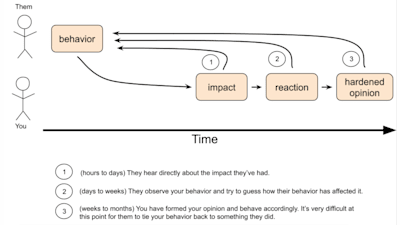
I’ve given a lot of direct feedback. Sometimes, it’s been challenging to do, like when it’s critical feedback to a coworker I don’t know well. Other times, it’s been fun, like when I remember saying aloud, “Hey – nice work on that project.” These moments dominate my personal highlight reel from the last five years because they’ve been great experiences for both of us. Feedback is a gift. My goal is to get everyone reading this to give their peers more effective feedback.

on newsletter.eng-leadership.com
I regularly get questions about handling underperformance on LinkedIn and in sessions of my course, Senior Engineer to Lead: Grow and Thrive in the Role. Many first-time managers struggle with this issue, and the reason is that it’s not straightforward. It has many nuances, and it varies depending on the specific case.

on open.substack.com
Having a good manager is a blessing. Here's how to spot one! Your manager is one of the most important people for your growth in the organization. I’ve grown from engineer to CTO, and I’ll share my take on what makes a good manager from both sides → as an IC and a manager. Paid article
on open.spotify.com
When you’ve gone after something you want, like a promotion or less tedious work, did you follow the typical advice to lean hard into your confident, forceful side? When interacting with people at work, how often do you find yourself deflecting praise, downplaying your accomplishments, or responding “busy!” when someone asks how you’re doing? We frequently trade between being likeable and strong, but is it possible to be both assertive and warm?

on hbr.org
Listening is a vitally important skill, but it is sadly undertaught and physically and mentally taxing. This article offers nine tips to help leaders become more active listeners and breaks down the subskills involved in listening and how you can improve in them.

on hbr.org
It’s easy to get angry when you’re constantly picking up the slack or fixing mistakes caused by a rule-breaker. The unfairness of it all can also get under your skin and cause resentment. But you can’t just march up to them and demand they stop ignoring standards. Ordering them to fall in line rarely works. Here are five strategies for how to address the issue without creating hostility or damaging your working relationship.

on hbr.org
High performers are essential to a team’s success, often producing significantly more output than their peers. However, research shows that they often receive lower-quality feedback. Managers tend to focus on lower performers, neglecting the development needs of high performers. High performers tend to thrive on feedback and are motivated by it. To engage and retain high performers, managers should provide constructive feedback, highlighting areas of growth.

on newsletter.weskao.com
There’s a right and wrong way to proceed. Here’s how to increase the chances your leader listens and takes action–while reducing the chance they feel threatened.

on hbr.org
To manage the employee experience, leaders must deeply understand employees’ perceptions, feelings, and desires and respond thoughtfully. This is particularly crucial when immense resources are invested in gathering employee feedback through pulse surveys, town halls, and data scraping from internal communications. But leaders are often overwhelmed by the data and struggle to translate it into actionable insights. The authors conducted detailed interviews with executives and HR leaders from more than 20 multinational companies in sectors such as technology, financial services, and consumer goods. Their work reveals that although technology has simplified the collection of data, the real challenge lies in making sense of it and integrating it into a coherent strategy.

on hbr.org
Performance reviews are an important tool to help managers and organizations motivate and engage their workforce. Narrative-based feedback provides employees with more personalized analysis and can shed light on individual paths for improvement, while numerical feedback offers clear benchmarks for employees to track and meet specific targets. In a new study, researchers examined whether one format — or a combination of the two — was seen as more fair and motivating by employees. They found that while narrative feedback is perceived as the most fair, it can be especially meaningful for those employees with room to improve.

on peterszasz.com
Breaking down the feedback cycle process from preparation to follow-up. Approaches I found useful, antipatterns to avoid, and a document structure that can help bring it all to one place. I hope to turn this often-dreaded task into a powerful tool for individual growth and organizational success.

on medium.com
Just about every problem I encounter in my role involves communicating more often. Early on, as an engineering leader, I had to tackle a strange communication problem. This team had fully embraced a Scrum mindset, and due to rapid prototyping requirements, it worked in one-week sprints. Yet there was still a problem. The team was always working in drastically different directions and at various technical levels, constantly bickering about what needed to be done. One-on-ones with me were full of complaints about other team members and were always heated.

on newsletter.canopy.is
How do we give feedback on something as subjective as tone or even personality to prevent negative behaviour from spiralling into something bigger?

on hbr.org
Thank-you notes are a powerful professional tool for leaders. The author — a senior communications professional at Pfizer — shares her experiences learning about the power of thank-you notes from her high-powered mentor and seeing how it benefitted their business, professional relationships, and personal well-being. She also posits five principles of thank-you note-writing: Take time to reflect; thank those who are often forgotten; be specific; make it matter; and it’s never too late.

on hbr.org
In recent years, leading executives from firms like Google, Bridgewater, and Netflix have touted the advantages of a work environment marked by candid feedback. Employees seem to have bought into the benefits, too. In a 2019 survey, 94% said corrective feedback improved their performance when presented well. Unfortunately, the increased diversity of our workplaces has made it much more likely that feedback will not go over well and will be misinterpreted as an act of hostility. This article explains how to navigate the divides.

on hbr.org
When we ask for feedback on our work, we often get poor-quality feedback that is not useful or makes us feel attacked or defensive. Part of the reason is that we’re asking for feedback. Most requests are too generic, too open, and too late. This article discusses a three-step process for getting more constructive feedback that supports our growth, strengthens our relationships, and accelerates our careers.

on hbr.org
Approaching a conversation about improving an employee’s performance requires preparation, empathy, and a focus on collaboration. Even though hearing the truth about their current performance will be tough and potentially hurtful, it’s a teaching moment managers must embrace to help them become more resilient and adept at problem-solving and developing professional relationships. The author offers several strategies for treating difficult performance conversations not as fault-finding missions but instead as opportunities to work collaboratively to define a shared commitment to growth and development.

on hbr.org
Living under constant scrutiny and comparison teaches Olympic athletes not only how to excel in their sport but also how to effectively harness feedback for continuous improvement. Learning to discern which feedback to embrace and which to filter out becomes essential for not just surviving but thriving, and those lessons are equally applicable to all of us.

on hbr.org
Your boss points out what’s going wrong more often than what’s going right. They nitpick your work, highlighting every possibility for improvement. Meetings sometimes feel like inquisitions. While a generally difficult boss might be challenging due to their mood swings, lack of clarity, or unpredictability, a highly critical boss consistently focuses on “the gap,” not the gain. In this article, the author outlines practical strategies for handling a highly critical boss.

on hbr.org
Managers often have preconceived notions that can act as a barrier to giving timely, helpful, and honest performance feedback. Three of the most common preconceived notions are: 1) the feedback conversation is going to be long and drawn out; 2) the feedback needs to be perfect; and 3) the feedback might be taken the wrong way. It’s understandable that you don’t want to upset your direct reports. Nevertheless, other people’s reactions and responses to feedback are largely out of your control. What is not is being clear about what you’re observing and requesting, naming the impact, focusing on strengths, developing actionable next steps, and delivering the feedback with care and curiosity.

on hbr.org
Navigating unsolicited ideas, advice, or suggestions at work is a common scenario. Consider the colleague who jumps in with a barrage of “Have you considered…?” or “What about…?” questions during your carefully crafted presentation. Or how about when you request specific information and the responses you get back include unsolicited advice on aspects of your work you didn’t ask about? In this article, the author offers four strategies for how to set boundaries around unsolicited input with tact, respect, and assertiveness.
Přihlásit se k odběru nově přidaných inspirativních tipů pomocí RSS
Vedete technologický tým, máte na starosti marketing či HR v tech firmě a rádi byste se (nebo nejen sebe) rozvíjeli, ale nevíte, kde začít? Máte pocit, že se potřebujete ponořit do dalších témat a jen zajít na nejbližší akce či meet-up nemusí být dost?
Vyplněním e‑mailu se přihlašujete k obsahovému newsletteru tvůrce a souhlasíte s obchodními podmínkami.
