


on
*sdílené články jsou řazeny od těch podle mě nejlepších po dobré
on

on fortune.com
CEOs leading businesses from Nvidia and Airbnb to United Airlines and Twilio are rewriting corporate norms on their own terms.

on share.google
The person everyone relies on for support—the one who remembers birthdays, volunteers first, and always asks how you're doing—might be crying alone in their car, desperately wishing someone would finally ask them the same question.

on www.amyegallo.com
Amy's reading lists feature curated articles, videos, podcasts, and other resources on popular topics. If you are interested in topics such as psychological safety, working with difficult people, or leaving work, simply choose the list you would like to receive. For a simple e-mail, you can download a PDF with a curated list of articles

on hbr.org
Information overload is the inevitable result of the modern organization’s always-on, more-is-better approach to communication. Unfortunately, it is also a driver of employees’ disengagement and poor decision making. While we are all, as employees and leaders, affected by this reality, the onus is on the company communicators themselves to craft a low-burden culture. It will require energy, expertise and coordination to architect and reinforce more human-centric communication practices.

on hbr.org
For too long, communicating strategy has been an afterthought. Executives have shared long, bombastic documents or withheld critical information and expected people to just “get it.” And it hasn’t worked. Greater external uncertainty, collaboration, employee anxiety, and organizational openness demands a change of approach. The author presents five actions that will improve the clarity and quality of communication, enabling stakeholders to make a more substantive and meaningful contribution to the strategy.
on hbr.org
Every leader operates from a set of invisible assumptions that quietly shape their decisions and interactions. Some of these internal beliefs propel us forward—but others, what I call hidden blockers, undermine our best intentions without us even realizing it. When you’re in a leadership position, limiting beliefs don’t just stunt individual growth; they ripple outward to constrain your team members. One of the most dangerous for senior leaders is the hidden blocker “If I can do it, so can you.” If you think it is not a dangerous one read the article and see for yourself!

on hbr.org
Numerous researches have shown that we forget much of what we experience in a day. Knowing this, how do you create messages so there is a better chance of people remembering them? The author uses concepts from memory science to help you craft messages — whether it’s a presentation, an email, or a speech — that will be likely to stick.

on newsletter.eng-leadership.com
As a leader, your evaluation is no longer based solely on your individual contributions; instead, it depends on the success of your team and projects. This is a crucial point to remember as an engineering leader. This article outlines how to be an effective manager in the tech industry, highlighting specific traits that are essential for success.

on hbr.org
Like any living systems, teams need regular care, attention, and intentional renewal to thrive. Whether driven by restructuring, relationship tensions, demotivation, or strategic pivots, there comes a moment when a team needs more than a tweak. It needs a relaunch. By pausing to reassess, reset, and realign, leaders can reenergize their teams and strengthen trust. Relaunching a team isn’t a sign of failure—it’s a sign of leadership.
on newsletter.eng-leadership.com
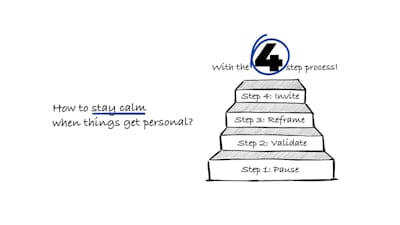
6 real-world stories and the 4-step framework for resolving conflicts effectively!

on read.highgrowthengineer.com
This article provides a clear, actionable, and memorable framework for communicating your impact. The framework consists of 5 levels, and each level builds upon the previous one, showing how one bad example can be transformed into an amazing example by laddering up the communication levels.

on hbr.org
Most leaders enter high-stakes conversations armed with rehearsed arguments and rebuttals to anticipated objections—mindsets that unknowingly blind them to breakthrough insights and put their relationships at risk. The “Curiosity Check,” a rapid, pre-conversation diagnostic, helps leaders shift from defensive certainty to productive curiosity.

on hbr.org
Over one quarter of workplace meetings leave employees with lingering negative effects such as lowered engagement and productivity that can last hours. This is called a meeting hangover. Learn to prevent it as well as cure it.

on terriblesoftware.org
Discover why engineers hate managers, the common management anti-patterns that destroy trust, and practical solutions from someone who’s been on both sides.

on open.spotify.com
With some high-profile CEOs demanding workers return to the office five days a week, and others touting the benefits of fully remote work, many companies compromised and ended up somewhere in the middle. But that hybrid compromise can often bring the worst of both worlds. Wharton professor Peter Cappelli and senior HR strategist Ranya Nehmeh have looked deeply at what is going wrong with hybrid – and how leaders can make it right. They explain practical ways to improve meetings, build culture, and inspire commitment from employees in a hybrid model, which is most likely here to stay. Cappelli and Nehmeh are the authors of the forthcoming book In Praise of the Office: The Limits to Hybrid and Remote Work and the HBR article “Hybrid Still Isn't Working”.
on open.spotify.com
Have you ever realized, partway through a project, that you and your boss aren't on the same page? Maybe your definitions of success differed, or their expectations were unclear. Maybe you couldn't get them to listen, or you couldn't figure out why they insisted on doing things a certain way. Managing up means tackling these disconnects head-on-and doing it through honest, well-timed discussions. Executive coach Melody Wilding joins Amy G to explain why alignment on goals and clarity around working styles are essential. They

on www.fastcompany.com
Making difficult decisions is an inevitable part of being a leader. And at times, those decisions are unpopular. Yet in instances when it requires the efforts and cooperation of their team members, leaders have to find a way to get buy-in from the people that oppose those decisions in the first place. This isn’t easy, and requires a delicate balance.

on charity.wtf
A few eagle-eyed readers have noticed that it’s been 4 weeks since my last entry in what I have been thinking of as my “niblet series” — one small piece per week, 1000 words or less, for the next t…

on newsletter.eng-leadership.com
Are you sharing knowledge with others, or are you becoming a bottleneck? Here's how to find out! Taking time off is essential, regardless of your role. Even a CTO needs a break. This is why it's important and how you can prepare for it.

on hbr.org
Leading a meeting to deliver bad news requires a careful balance between acknowledging the situation and allowing for a sense of optimism. Your words and tone can either provide comfort or increase stress. It’s important to find strategies that help you strike this balance. Additionally, avoid scheduling other meetings immediately after the all-hands meeting, and make sure to stay available for individual conversations. This article shows you how.

on www.fastcompany.com
Discussing money at work can be taboo. Here are reasons to consider it and strategies for how to approach the topic!

on hbr.org
Layoffs are trauma-inducing for an organization and its employees. When handled badly, some never fully recover. Leaders make six common mistakes when communicating layoffs: 1) They’re not transparent about the state of the business; 2) They’re not clear on the path forward; 3) They don’t get the tone right; 4) They don’t offer remaining employees the opportunity to ask questions; 5) They don’t bring middle management on board; and 6) They don’t show appreciation to departing employees.

on hbr.org
You’ve decided it’s time to let the low performer on your team go. You’ve covered your bases in terms of documentation, and you’ve coordinated with HR. But now you have to have the dreaded conversation. What’s the best way to deliver the news? Who should be in the room with you? What do you say and not say? And how do you tell the rest of the team?

on hbr.org
Bad decisions often stem from flawed decision-making processes, such as unclear alternatives, insufficient information, or inaccurate cost-benefit analysis. However, the issue can also lie in the decision maker's mindset. Get back to the article from 1998 discussing eight psychological traps that can impact business decisions. And learn how to overcome them. Make better decisions.
Přihlásit se k odběru nově přidaných inspirativních tipů pomocí RSS
Vedete technologický tým, máte na starosti marketing či HR v tech firmě a rádi byste se (nebo nejen sebe) rozvíjeli, ale nevíte, kde začít? Máte pocit, že se potřebujete ponořit do dalších témat a jen zajít na nejbližší akce či meet-up nemusí být dost?
Vyplněním e‑mailu se přihlašujete k obsahovému newsletteru tvůrce a souhlasíte s obchodními podmínkami.
